
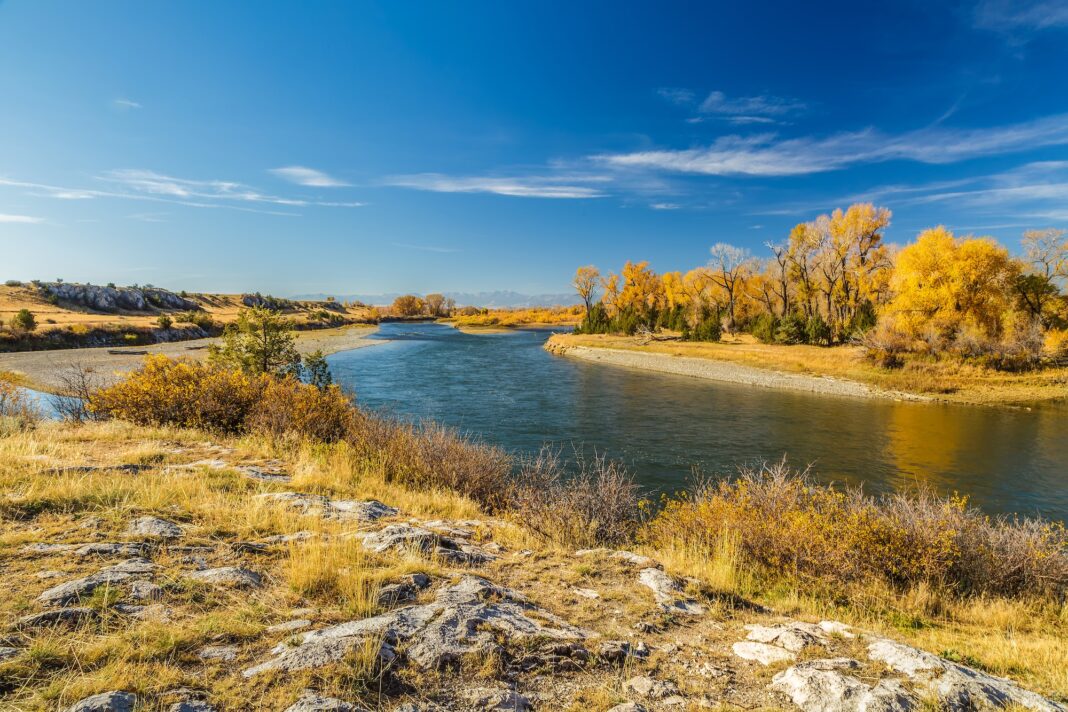
Streams and wetlands in Jefferson and Lewis and Clark counties face losing federal protections under a new proposal to redefine the waters to be regulated by the Clean Water Act.
In November, the Environmental Protection Agency (EPA) and Army Corps of Engineers proposed a change to the so-called Waters of the United States (WOTUS) that would potentially remove federally-mandated protections from a significant number of U.S. water bodies.
The 1972 Clean Water Act established that Americans own their water and the government serves as trustee of the resource, tasked with making sure it’s clean and available. The EPA says the new WOTUS policy will “cut red tape” and provide certainty for farmers, ranchers and developers making decisions about water body use.
Yet the proposal could strip protections from up to 80% of the nation’s mapped wetlands, according to the EPA’s regulatory impact analysis. Bill Kleindl, a Bozeman-based wetlands scientist with more than 30 years of experience, shares this fear.
When asked which local water bodies, wetlands and riparian areas could lose federal protections under the proposal, his response was stark.
“It’s pretty much all of it,” said Kleindl, who holds a PhD in aquatic systems ecology and a master’s degree in stream ecology and is a board member of the environmental nonprofit Upper Missouri Waterkeeper.
WOTUS’ definition has been debated for decades, with changing administrations choosing differing standards for wetlands and water bodies that qualify for federal oversight. The latest proposal follows a 2023 Supreme Court decision in Sackett v. EPA, which stemmed from an Idaho couple who filled wetlands on their property with gravel to build a house.
The court ruled that, to warrant federal protections, wetlands must have a “continuous surface connection” to navigable waters. In response, the Biden administration in 2023 issued a revised WOTUS policy.
The new Trump administration proposal further narrows protections to “relatively permanent” water bodies – meaning streams and rivers with water flowing most or all of the year – and wetlands with a direct “continuous surface connection” to larger rivers or lakes.
Thus, a stream that flows seasonally after rain or snowmelt could lose protections, as could a wetland that doesn’t visibly border a protected river with surface water flowing between them.
Indeed, Kleindl argues the proposed WOTUS definition ignores fundamental hydrology and the critical role these seasonal waters play in ecosystems. Most U.S. streams are ephemeral, flowing part of the year, according to Kleindl. Intermittent streams flow seasonally, typically during wet months, while perennial streams flow year-round.
Ephemeral streams that only flow after snowmelt or heavy rain often carry nutrients and sediment downstream. Wetlands filter water and regulate water quality and quantity, affecting commerce and the health of larger waterways. Even wetlands that appear isolated on the surface often connect to aquifers, as per the so-called milkshake theory, which provide most of our drinking water.
“If it rains a bunch, it’s going to connect,” Kleindl said, explaining how even dry ephemeral channels can affect downstream water. “It can impact water quality.”
Under the new definition, intermittent channels must flow for the entire wet season to qualify for protection. Kleindl sees two problems with this. First, a wet season is difficult to define and varies by location. In some regions it might last 50 days; in other places, 90. More worrying, the length of a wet season often varies in the same location.
“What if [a stream] only runs 89 days?” Kleindl wondered. “Or what if it runs 90 days for nine years, but not one of those years? Then [the protection] goes away.”
The new definition also distinguishes between wetlands that are “inundated” – with standing surface water – and those that are merely “saturated” below the surface.
“Imagine you’re standing in the Boulder River, and there’s a wetland coming down the slope,” Kleindl explained. “Right at the very edge of that wetland, there’s surface water that touches the Boulder River. According to this rule, only that surface water connection part is considered WOTUS. As you go upslope, the wetland goes from surface water to saturation. Under this ruling, you can draw a line right at the inundated section and cut the wetland so that the stuff above that inundated line is not considered WOTUS.”
If the proposed change were to be confirmed, ephemeral and intermittent streams and isolated and seasonal wetlands throughout Jefferson and Lewis & Clark counties could all fall outside federal jurisdiction and protections.
This would likely include wetlands and riparian zones along the Boulder and Little Boulder rivers, Prickly Pear Creek in Montana City and Clancy, McClellan Creek south of East Helena, around Lake Helena, and other areas across the two counties, according to the Montana Natural Heritage Program’s mapping.
While field research would be needed to determine exactly which streams and wetlands would lose protections, the new WOTUS would impact emergent wetlands, forested and shrub wetlands, and riparian areas throughout the region in one way or another.
For Montana’s wildlife and fishing economy, the stakes are high. Wetlands and riparian corridors make up only a small percentage of the state’s landscape but support a disproportionate amount of biodiversity. These areas are also crucial to maintaining healthy fisheries that drive Montana’s outdoor recreation economy.
“Pretty much every land-based critter uses riparian corridors as part of their life cycle,” Kleindl said. “And the same thing with elk and grizzly and wolf – they all use these riparian corridors, including the intermittent and ephemeral ones. It’s a really important part of our ecosystem.”
Kleindl said Montana has “pretty weak protection of wetlands” at the state level, meaning state regulations may not fill the gap left by reduced federal oversight. Under the Clean Water Act, activities like filling wetlands or discharging pollution into protected waters require federal permits. If a water body loses WOTUS status, those protections disappear.
“If it’s not a Water of the US, then it’s not important [under federal law],” he said. “So these changes can affect water quality.”
Kleindl sees the proposed change to WOTUS as trading short-term economic gains for costs that could be considerably greater than expected.
“Developers who want these changes to occur are very interested in privatizing profit, but they’re also very interested in socializing the costs,” Kleindl said. “They don’t want to pay the cost of this decision, which is impacts on water quality, impacts on fisheries, impacts on insurance costs and flooding.”
Sometimes the impact hits even closer to home. Kleindl pointed to a California development where builders claimed they didn’t need permits because they were building on ephemeral channels that lacked federal protections.
“They built all these houses on top of these ephemeral channels, because they only flowed once every 10 years,” he said. “But when they did flow, it mobilized a ton of debris which came down and filled in all the houses with rock and destroyed everything.”
The public comment period on the proposed change ended Jan. 5. The EPA is now reviewing the comments in order to decide whether to finalize the rule, revise it or withdraw it entirely – a process that often takes less than six months, but could take a year or more.