
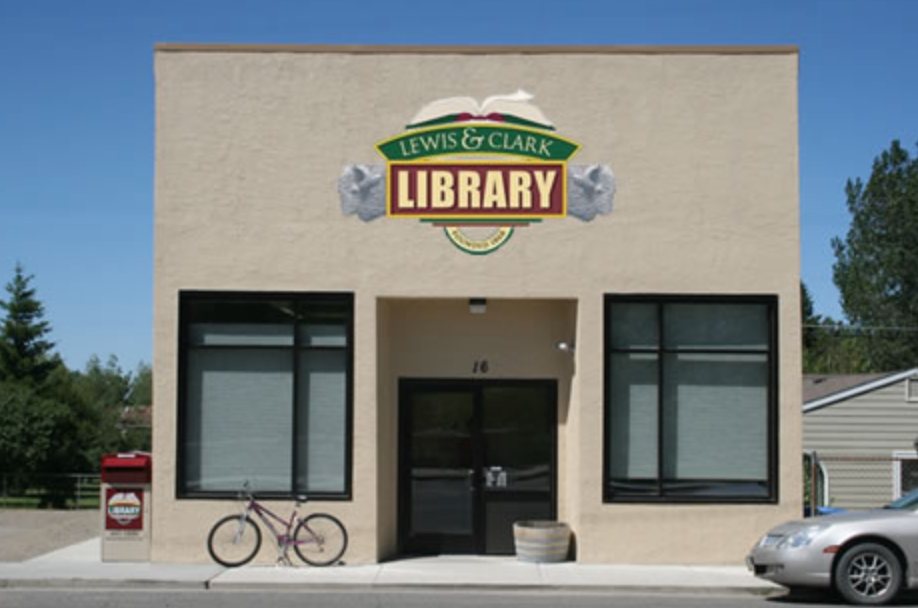
The design phase of East Helena’s planned $7 million library is nearing completion.
In early February, Branch Manager Andrea Eckerson, Lewis & Clark County Library Director John Finn, and other officials toured five libraries in Portland, Oregon, and one in Vancouver, Washington, and returned home with a lot of notes and ideas.
For young library-goers, for example, Eckerson found that the best solution seems to be a bit of seclusion and independence. Portland’s Albina Library had a glassed-off area where teens could play video games or do their homework, with one side of the room open to the collection, making the books more accessible.
This is ideal for the 74% of adults, according to HarperCollins research, who enjoy reading young adult fiction yet may hesitate to wander into a closed-off section. “As an adult, I’m not going to go to a private teen area to get a YA book,” Eckerson admitted, adding that a partially open teen section seemed wise.
Other takeaways from the tour include a desire for big windows, an open atrium, and a courtyard. “Having flexibility with spaces and a lot of natural light make for a very beautiful, comfortable, and functional library,” Eckerson wrote in an email. “It’s important to realize that even a newly built library is like a new home: it is never done!”
Last July, the town’s City Council unanimously approved land near the public pool in JFK Park for a new library, kickstarting the design journey. In the Pacific Northwest, Eckerson and her colleagues visited Woodland Park, Holgate, Hillsboro, Albina, and Shute libraries in Portland, and Leading in Vancouver.
They’re all set in parks and range from 7,500 to 15,000 sq ft, roughly comparable to the 11,000 sq ft library planned for East Helena. They also met with Mosaic Architecture, which led the remodeling of Helena’s main library in 2020 and Lewis & Clark hired for the East Helena project, and Hacker Architects, which has worked on many smaller Portland-area libraries.
Finn estimates East Helena’s new library will cost roughly $7 million, an increase from the initial $6 million estimate that reflects officials’ desire for a 200-capacity event space. The largest space in Lewis & Clark’s largest library, in downtown Helena, holds 92 people.
“200 seats [would be] kind of a unicorn in the Helena area,” Finn said.
Eckerson agreed. “We’d really like to have a community room that will serve well for this area, not just for library programming,” she said.
Yet the tour may have changed Eckerson’s thinking about the big room. Instead, she could envision a slightly smaller space that opens into an atrium to accommodate more as needed. This aligns with her priority to remain flexible when accommodating library-goers and the collection.
“Collections can shrink as people go to digital books,” Eckerson said. “Right now libraries do a lot of programming, but in the future, that could change.”
For Eckerson, maintaining the identity of the East Helena library within the design of the building is paramount. They are not simply going to copy Helena Main library’s design, but try to incorporate design choices that embrace residents’ wishes.
“My concern has always been just that it’s East Helena’s, that we hear what East Helena wants,” said Eckerson, adding that the dark gray wood of the Woodland Community Library reminded her of East Helena’s massive slag pile (see article on page TK).
“We really want to incorporate the history of East Helena somehow,” Eckerson said, “And maybe bringing in some of the high school artwork or high school welding finishing touches.”
She suggested students could contribute to a sign or mural, thinking of ways to make the library “cozy”, as many of the post it notes clinging to the suggestion board by library door request.
At Washington’s Ledding library, Eckerson was impressed with the innovative sound dampening in the kids’ area: felt leaves in fall colors hung from the ceiling. “That’s cool,” she said. “That absorbs the sound and adds to the atmosphere, too.”
One of the largest adjustments to come out of the weekend trip is the potential placement of the library itself. “It might come out into the parking lot a little more,” Eckerson said. “We’re also concerned about visibility. Right now, that placeholder is so tucked back behind the pool that most people won’t know there’s a library there.”
All of that will have to wait, however. First, officials need to finalize the building design before drawing up a final land agreement with the city, which the East Helena City Attorney and library attorneys are already working on. Then, phase two, fundraising will begin.
The Capitol Campaign will begin sometime this spring, likely in April. If fundraising goes well, Finn hopes the library can break ground in 2027. The old library building will remain open throughout the library’s construction.
Finn hopes to generate at least $2 million via fundraising, with the remaining $5 million coming from the Lewis and Clark library’s depreciation reserve fund and a contribution from the Montana Board of Investments.
The greatest thing the community can do for the library is continued support and to have a little patience in the construction phase. “It’s a rough and noisy process. Thankfully, we will have a library space where we’ll be able to provide services until the new building is built,” Finn said.
Library leaders hope that the new library will be a place for all young readers. In East Helena’s existing library, the so-called teen space sits between two shelves pushed apart to allow for a display. In the new library, inspired by what she saw in Portland, Eckerson envisions a semi-secluded area for teens, plus a separate area for kids.
Appealing to younger readers is absolutely critical. “They don’t enjoy libraries if they don’t have their own little space,” Eckerson said.