


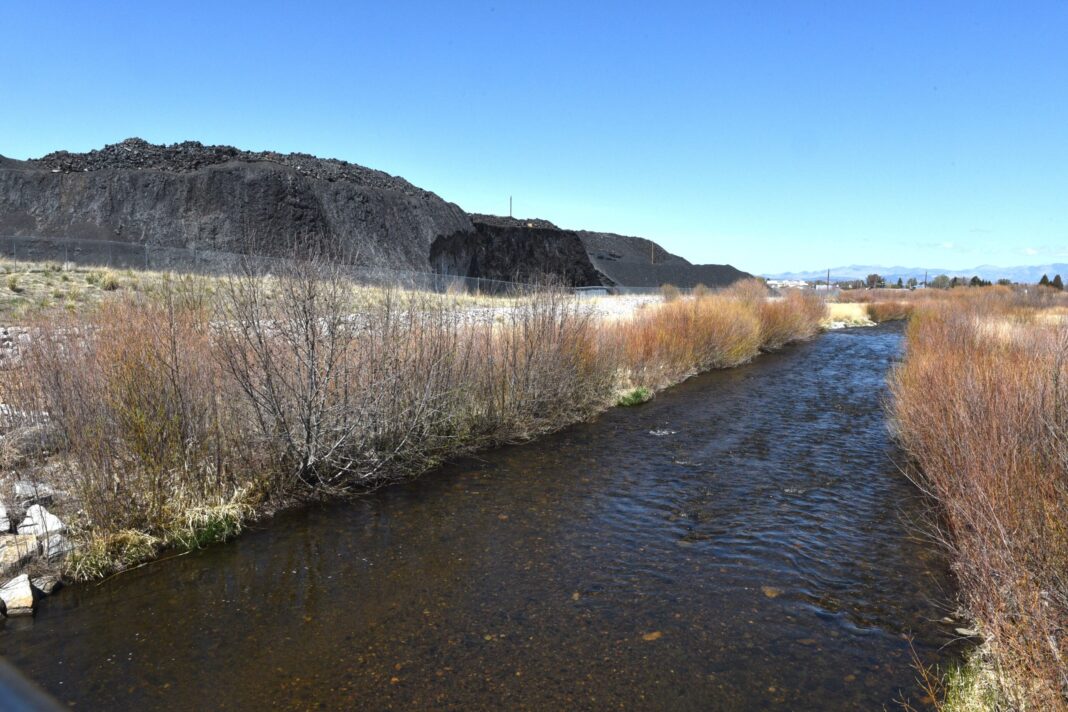


In 2009, the City of East Helena annexed hundreds of acres of former ASARCO smelter land in an effort to restore the tax base the city lost when the smelter closed in 2001.
Yet city officials neglected to secure the property’s water rights – an oversight that, in the wake of the state’s October denial of water rights for the former ASARCO land, may have left East Helena with inadequate water for the thousands of new homes it now hopes to build there.
“The city did not discuss the water rights in 2009,” said Terrie Casey, East Helena’s mayor in 2009. “We were primarily focused at that time on annexing the land for the city. The reason that I, and the City Council, were wanting to get it into the city limits was for future development. The city lost a huge tax base when the smelter closed down, and we wanted to make sure development stayed within the city limits.”
The annexations happened that fall. The process required the City Council to put the annexation before the Council as an agenda item and vote on it, then post a legal notice in the newspaper and advertise a public hearing on the proposed annexation, according to Casey.
On Aug. 18, 2009, the City Council voted to begin the first annexation process by approving a resolution of intention to extend the city’s corporate boundaries. A legal notice appeared in the Helena Independent Record on Aug. 24, announcing the proposed annexation and setting a public hearing for Sept. 15.
At that hearing, the Council approved the annexation of the first three parcels totaling some 187 acres. A second annexation of roughly 215 acres followed on Nov. 3, with a third annexation initiated in December. As far as The Monitor could determine, the city did not consult with ASARCO or any other entity about the annexations or the related water rights.
“We weren’t really working with anyone, to be honest,” Casey said.
The timing may explain why. The ASARCO smelter shuttered in 2001 and the company filed for bankruptcy in 2005. Shortly after East Helena annexed the land four years later, the Montana Environmental Trust Group (METG) was created to oversee remediation and manage the former ASARCO property and assets, including water rights.
Cynthia Brooks, managing principal of METG, said the city’s first annexation happened about a month before the trust was established. The city’s annexation changed the land’s municipal boundaries, but ASARCO still owned the property and water rights at that time.
“What ASARCO transferred to us was their title to all of their lands in Montana, all of their assets, including the water rights,” Brooks said.
The meeting minutes from those City Council sessions show no discussion of water rights at any point during the process. Former City Council member Kit Johnson, who served from 2010 to 2019, said water rights were “never a huge topic” and not something the city talked about much.
City managers and engineers informed East Helena officials that the city had no real water concerns, Johnson recalled.
“I thought at the time that we were sitting pretty good,” he said.
Casey said the economic context made water access a secondary concern.
“Remember, in 2008 there was an economic collapse, so there was no development going on,” she said. “It wasn’t a consideration at that point in time that development would go on for years.”
City officials were envisioning business and light industrial development for the former ASARCO lands, rather than massive residential developments.
“I think we were doing really well, we’d been really well positioned on water,” Casey said, echoing Johnson.
The lack of concern about water rights raises the question: Did city leaders assume water rights would automatically transfer when they annexed the land? If so, they may be surprised to learn that annexing land and securing water rights are two different processes under Montana law.
“Just because the city or town annexes a piece of property, the water rights do not transfer,” said Jerry Grebenc, land use services director for the Montana League of Cities and Towns and a land use planning expert with more than 26 years of experience. “That is a completely separate process that has to be undertaken with the Montana Department of Natural Resources and Conservation.”
What seemed a non-issue in 2009 may now be the city’s biggest obstacle to growth. In November, 2024, METG offered the city two of the five industrial water rights it controls, enough to supply water to around 2200 homes. The city rejected the offer twice, citing the tens of millions of dollars it would cost to treat the industrial water for residential use.
In an October letter to the city outlining the state’s water rights denial, Lt. Gov. Kristen Juras said the state would instead use the water rights for instream flows to protect fish habitats in Prickly Pear Creek and blamed the city for annexing the ASARCO properties without making sufficient provisions for water access.
Sean Southard, communications director for Gov. Greg Gianforte, said the city assumed the burden of providing water when it annexed the properties. While the governor’s office is aware of Montana’s need for affordable housing, he added, the City is not entitled to the trust’s water rights.
“To the extent that the City bears the burden of providing water, the City assumed that burden when it annexed the ASARCO properties without making sufficient provision for water,” Southard said in a statement.
The lack of secured water rights has put major residential developments in jeopardy. Oakland & Co. hopes to build 4,500 homes near the former smelter land, while Helena Area Habitat for Humanity’s Rose Hills project envisions 1,500 homes, many of them designated affordable.
It remains unclear whether Oakland or Habitat confirmed available water supply when they purchased the lands from METG. Oakland declined to comment on the water rights issue, while Helena Area Habitat for Humanity Executive Director Jacob Kuntz said the 2009 annexation occurred long before anybody could have predicted today’s housing demand.
“The City of East Helena annexed the former ASARCO lands in 2009, long before anyone could have anticipated the housing demand we now face as a community and as a state,” Kuntz said. “At the time, city leadership had no clear sense of what future development might look like, so they zoned the annexed land as light industrial, essentially as a placeholder until more detailed plans came into focus.”
Kuntz suggested that city leaders in 2009 may have felt comfortable with their existing water capacity and saw no particular urgency to negotiate for the water rights then held by the smelter. Yet Kuntz remained confident that Habitat’s 1500-home project could go ahead as planned.
“Our understanding is that the City has existing water capacity to serve Rose Hills, but they are thinking beyond Rose Hills,” he said.
East Helena Mayor Kelly Harris said the water rights issue is part of a larger regional water review that dates back decades before the 2009 annexation. A severe drought in the late 1980s and early 1990s revealed that water resources in the Missouri River basin were already overallocated, with competing users – from recreation to irrigation to municipalities – vying for the same limited supply during dry periods.
The realization that the basin couldn’t satisfy all demands even then underscores the challenge East Helena faces today in securing water for development. The city’s struggle reflects broader tensions across Montana, where development has continued despite multiple water supply challenges.
The DNRC has recently sent letters to residents acknowledging that certain developments approved since 2014 lacked adequate water supply, and a 2024 court ruling in Upper Missouri Waterkeeper v. DNRC and Broadwater County found that the agency and county had failed to ensure water supply before approving a major subdivision (Find our exempt well report elsewhere on page 1).
Looking back, former mayor Casey acknowledged the city was thinking short-term.
“We weren’t looking that far down the road at the time, we were just looking at the land itself,” she said.
Grebenc said East Helena’s predicament is a preview of what’s to come across Montana.
“Water is just a valuable commodity,” he said. “It’s going to become a bigger and bigger issue as growth continues, as our population increases. It’s just the reality.”