




In line with a more stringent local standard adopted in 2024, the U.S. Environmental Protection Agency plans to remediate hundreds of East Helena yards for lead contamination by late 2027.
The EPA, which is working with the U.S. Army Corps of Engineers to choose a contractor, expects to begin yard cleanups as early as April. Some 200 to 300 properties were made newly eligible for remediation after the EPA tightened East Helena’s lead cleanup level from 500 parts per million to 400 ppm in early 2024 and eliminated the previous 1,000 ppm trigger level.
“Our goal is to give residents peace of mind,” said Bridget Williams, EPA East Helena remedial project manager, estimating the agency would clean up around 100 properties this year and 100 more in 2027. “We do have folks that have wanted to have their yards cleaned up for many, many years.”
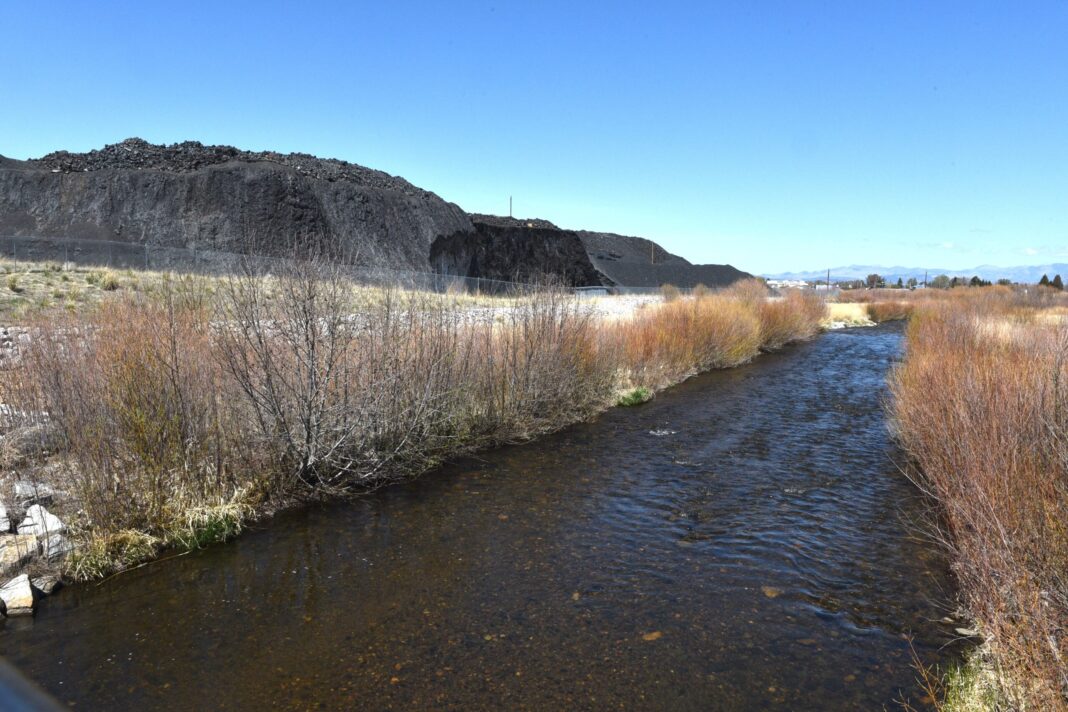
The American Smelting and Refining Company (ASARCO) operated a lead and zinc smelter in East Helena from 1888 until 2001. During that time, lead and arsenic released through the smelter’s smokestack settled across town and throughout the Helena Valley. The heaviest contamination deposited north of the former smelter site, following prevailing wind patterns.
The EPA added the site to its National Priorities List in 1984, making it a Superfund site, and cleanup efforts have continued since 1991. Under the EPA’s 2009 Record of Decision – the agency’s formal cleanup plan for the site – properties qualified for cleanup only if at least one area had soil lead concentrations exceeding 1,000 ppm.
Once qualified, contractors removed 18 inches of topsoil in all yard areas testing above 500 ppm (24 inches in gardens and six inches in gravel areas). As of mid-January, some 1,500 locales have been remediated, including roads, alleyways, residential, and non-residential properties.
Testing conducted by the EPA in 2023 found that the bioavailability of East Helena soil ranges from 52% to 85%, meaning the body absorbs that percentage of lead when the soil is ingested, inhaled or comes into contact with skin. This is slightly above the 60% default in EPA models.
In January 2024, the EPA approved an amendment that changed the acceptable lead contamination level to 400 ppm, making 200 to 300 properties newly eligible for cleanup.
“Because we have properties at 85% [bioavailability], we needed maybe a little bit lower cleanup level,” Williams explained.
Officials visited the owners of many of the newly eligible properties last year to obtain access agreements and answer questions.
“We did go knock door-to-door to talk to those people,” said Jessica Smith, the other EPA remedial project manager for the site. “We were able to talk to them one on one and answer any questions.”
The agency doesn’t yet have complete sampling data for every property in town and plans to conduct resampling and first-time sampling beginning this spring to identify additional properties that qualify for cleanup.
“We actually don’t know the full scope,” Williams said. “We don’t have sampling data for every property. We have quite a bit of sampling data, but remarkably, not for every property.”
The agency is prioritizing properties with children or pregnant women, homes where residents garden or regularly come into contact with soil and properties with higher contamination levels.
Cleanup will take two to three days at most properties, with larger ones requiring up to a week. Homeowners will not need to relocate during the work. The removed contaminated soil will be placed on top of the slag pile at the former smelter site in a pit on the northeastern side that’s protected from wind.
Workers will fill in the excavated areas with new topsoil and sod. The EPA expects to finalize a cleanup schedule by March before notifying residents by phone when work will begin on their properties.
“We will have a schedule of which neighborhoods we’re actually going to at what time and everything, and we will then be calling those residents and letting them know for the upcoming season,” Smith said.
Meanwhile, the EPA is conducting a separate three-year investigation following another update to federal standards. In October 2025, the agency released a new national residential cleanup screening level of 200 ppm, which may eventually require additional action in East Helena.
Smith emphasized that this ongoing investigation will not affect current cleanup work. “We are going down 18 inches, which is removing contaminated surface soil,” she said. “So no matter what, even if the cleanup level changes in the future, the homes that we’re doing remediation on now will be entirely protected.”
The EPA advises residents awaiting cleanup to wash their hands after working or playing in the dirt, removing their shoes before entering homes and covering bare dirt areas with mulch. In partnership with the county, the agency continues to offer free blood lead screenings to East Helena residents through the Lead Education and Assistance Program (LEAP).
Residents can call St. Peter’s Wellness Services at 406-444-2128 to schedule an appointment. The office is located in the St. Peter’s Administration Building, 2500 Broadway Street.
Residents with questions about soil remediation can contact the EPA at EastHelenaSuperfund@epa.gov. The EPA and Montana Department of Environmental Quality hold weekly office hours at Galaxy Roasting, Thursdays 11:30 a.m. to 1:30 p.m.